How to Stop Scattering Your Marketing and Build Systems That Turn One-Time Buyers Into Lifelong Fans
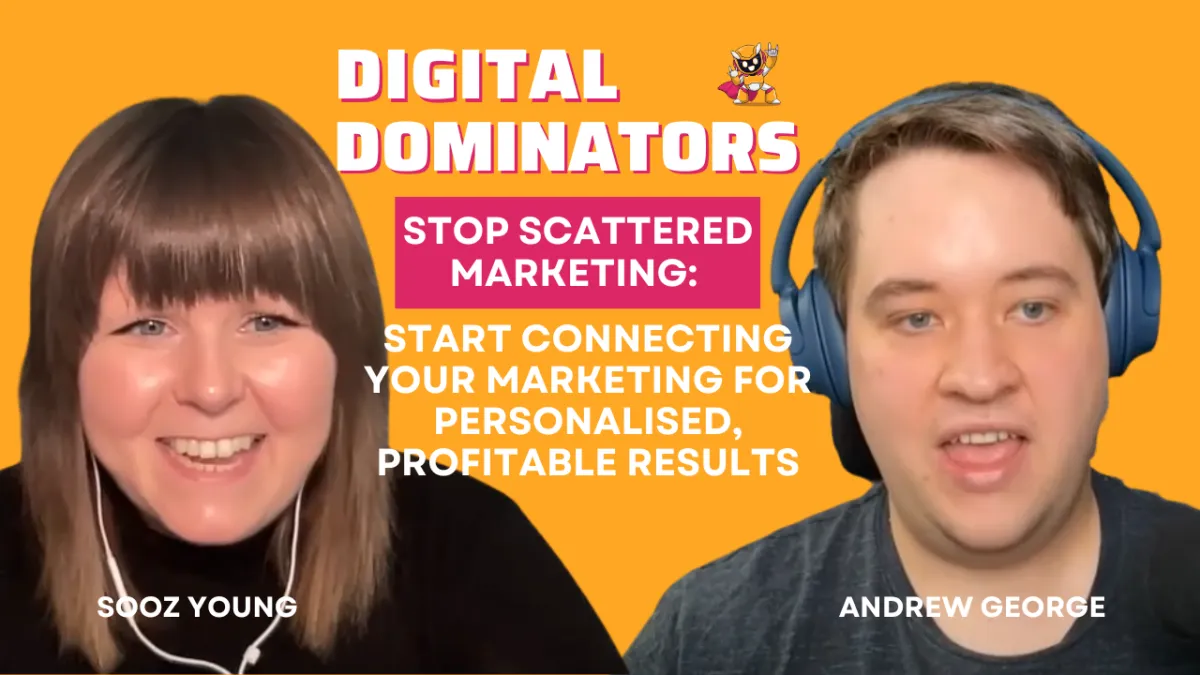
I recently joined Sooz Young on the Digital Dominators podcast to talk about something I see product-based brands getting wrong all the time: disconnected marketing. Here's a summary of what we covered, and how an omnichannel retention strategy can help you start fixing it in your business today.
If you're a product-based business owner juggling Shopify, email marketing, Meta Ads, Google Analytics, social media, and maybe a chatbot or two, but none of them seem to be talking to each other, this one's for you.
I sat down with Sooz on the Digital Dominators podcast to unpack what an omnichannel retention strategy actually looks like, why most brands are leaving money on the table, and the simple steps you can take to start fixing it.
From Personalised Gifts to Omnichannel Retention Strategy
Before I got into helping product brands, I ran my own product-based business;personalised gifts using machine embroidery. When COVID hit, orders went through the roof, which sounds great until Royal Mail became completely unreliable. I had a Christmas where my inbox was full of angry customers, and one stressful day where I overwhelmed a post office with a hundred parcels and they lost the plot (but that did help me convince them to give me a business account).
That was the moment I knew something had to change. People had already been asking me for help with tech and email marketing, so I leaned into that, and never looked back.
Having run my own product business gives me a perspective that pure marketers don't always have. I've lived through the operational chaos. I know what it's like to be drowning in orders while trying to figure out your marketing at the same time.
What Does "Omnichannel Retention" Actually Mean?
It's a word that gets thrown around a lot, so let me make it simple: it's about being across multiple channels - email, SMS, WhatsApp, social media, customer chat, and having them all work together instead of operating in silos.
Most businesses I work with are technically "on" all these channels. But the channels don't talk to each other. They end up sending the same message everywhere, or worse, sending emails to people who'd much rather get a text.
The goal is to speak to your customers where they actually want to hear from you, and to make the whole experience feel joined up, not repetitive.
Start With Less Data, Not More
One thing Sooz and I dug into was how to gather customer data without scaring people off. My approach is the opposite of what most businesses do.
Most brands hit you with a form asking for your name, email, phone number, address, and probably your shoe size. Every extra field you add, roughly half your visitors drop off.
Instead, start with just the email address. That's enough to begin the conversation. Then gather more over time. When they come back to your site and you already have their email? Show a different popup, maybe offering an extra 10% off in exchange for their mobile number. When they make a purchase, you get their shipping address. Down the line, ask for their birthday so you can run a birthday club.
It's a long game, but it works. And every piece of data you collect makes your marketing smarter and more personal.
Why Klaviyo Is My Platform of Choice
I've tried everything, started on Mailchimp like everyone else, worked with a few other platforms, but Klaviyo is where I landed and where I've stayed.
Here's why: it's not just an email marketing tool. It's a proper CRM for e-commerce brands. It handles email, SMS, WhatsApp, customer support, review collection, and even has a customer hub you can embed on your Shopify site. And it all lives in one place.
That last part matters more than people realise. When your email is on one platform and your SMS is on another, you have no idea who's received what. Messages overlap. Customers get annoyed. You lose the ability to build a coherent picture of each person.
Klaviyo also does something brilliant with reviews, it can track delivery and wait until a customer has actually received their item before asking for a review. We've all had that annoying email asking us to review something that hasn't even arrived yet. Small detail, big difference.
Channel Affinity: Let the Data Decide
This was one of the things Sooz found most interesting, and I think it's a game-changer for most brands.
Instead of asking customers upfront how they want to be contacted, just watch what they do. Klaviyo tracks what people open, where they click, and builds what it calls "channel affinity." If someone consistently opens your emails but ignores your texts, you know where to focus. If another customer only ever engages via SMS, send them SMS.
You're not guessing. You're letting actual behaviour guide your communication. And the beauty is, it happens automatically once it's set up.
The Abandoned Cart Revenue You're Missing
If I could shout one thing from the rooftops to every product-based business, it would be this: set up your abandoned cart flows.
So many people add items to their cart and don't check out. They got distracted. Their kid started crying. They weren't sure about the colour. Whatever the reason, a decent percentage of them will come back and buy if you just remind them.
Abandoned cart recovery should make up a meaningful chunk of your monthly revenue. And if you're using a platform that doesn't support it properly, you're leaving that money on the table every single day.
From Retention to Better Ads
Here's something that surprises a lot of people: your retention strategy can actually make your paid ads work better.
Any list or segment you build in Klaviyo can be pushed back to Meta as a custom audience. That means you can target your most engaged customers with specific ads, build lookalike audiences from your best buyers, or exclude existing customers from acquisition campaigns so you're not wasting ad spend.
The data flows both ways. Better retention data means better ad targeting, which means better return on your ad spend.
You Don't Have to Do Everything at Once
If there's one thing I want you to take away, it's this: start simple.
You don't need every Klaviyo feature on day one. You don't need to spend thousands a month. You can start on the free plan, up to around a thousand contacts, and build from there.
Here are the three things I'd focus on first:
Pick the platform that works for you. Whether that's Shopify, WooCommerce, or something else, don't let someone else's preference drive your decision. Choose what you're comfortable with.
Start small and build your marketing muscle. Even if you're emailing ten people, that's fine. Learn how to write effective emails. Use what little data you have. Get better over time.
Set up automation from day one. A welcome sequence, an abandoned cart flow, and an abandoned browse flow are non-negotiables. They run in the background and generate revenue while you sleep.
Want the Full Breakdown?
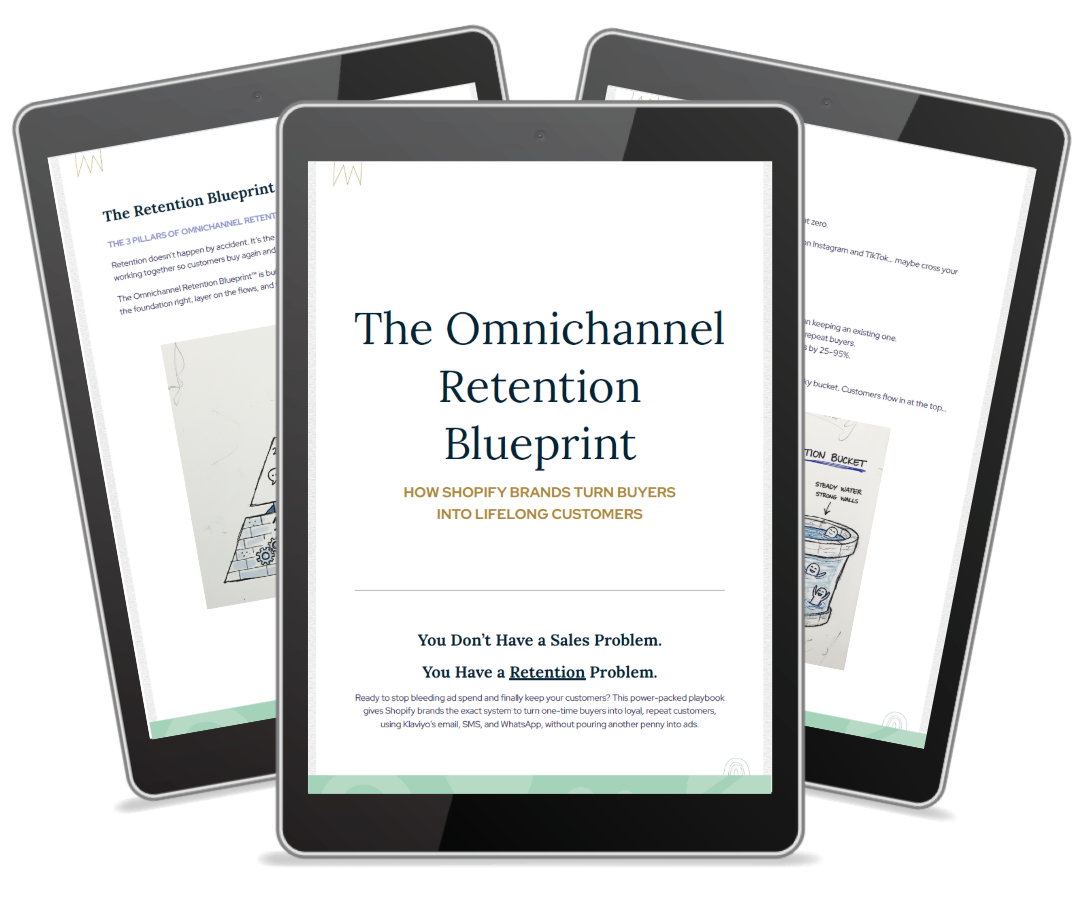
I've put together a free retention blueprint that walks you through exactly how to implement this step by step - no complicated setups, just the essentials to get your omnichannel retention strategy off the ground.
Download the blueprint at mrandrewgeorge.com/retention
And if you want to hear the full conversation with Sooz, you can listen to the Digital Dominators podcast wherever you get your podcasts.
Apple Podcasts: https://podcasts.apple.com/gb/podcast/digital-dominators/id1817720342
Spotify:https://open.spotify.com/show/4ZgzjafMIQ38AVcocsDJDN?si=7fa8e4b8a04e4fcc
Amazon Music:https://music.amazon.co.uk/podcasts/3d10fc61-c97c-4637-8732-10788043b958/digital-dominators